PodEpisodes

543 – Why Do We Lose Calibration of Perceptual-Motor Skill so Quickly and What Can We Do About It?

543 Revisiting the topic of calibration in direct learning, with a specific focus on why we lose calibration when not practicing. The blessing and curse of having a high learning rate.Download link Articles:Better with each throw—a study on calibration and warm-up decrement of real-time consecutive basketball free throws in elite NBA athletesA serial-position curve in…

Read More
542 – Training to Maintain, Skill Retention & Decay

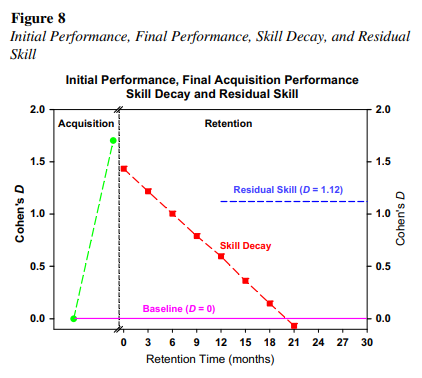
542 How quickly does a skill decay if we don’t practice? How does it depend on factors such as complexity? What are the best ways to maintain skill?Download link Articles:Procedural skill retention and decay: A meta-analytic review.An extended challenge-based framework for practice design in sports coaching More information:Subscribe in iOS/AppleSubscribe in Android/GoogleMy Research Gate Page…

Read More

541 – Task Simplification, Simplexity & Further Evidence Against the Need for Fundamentals

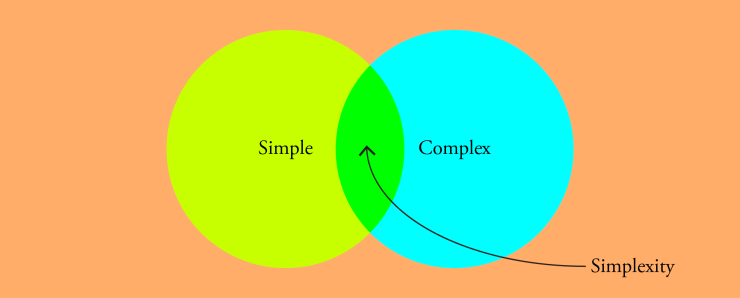
541 What is Simplexity? How does it relate to Task Simplification? And a look at another study providing evidence against the fundamentals first approach.Download link Articles:The impact of task simplification in skill acquisition for young children from a simplexity approach More information:Subscribe in iOS/AppleSubscribe in Android/GoogleMy Research Gate Page (pdfs of my articles)My ASU Web…

Read More

540 – How Does Variability of Practice Influence Search?

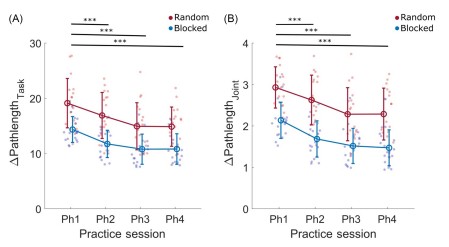
540 How does search in task and joint space (for an interception task) differ in blocked and random practice conditions?Download link Articles:Random and Blocked Practice Schedule Affect Search for New Movement Coordination Patterns Differently More information:Subscribe in iOS/AppleSubscribe in Android/GoogleMy Research Gate Page (pdfs of my articles)My ASU Web pagePodcast Facebook page (videos, pics, etc)Email:…

Read More

539 – Turvey, Lectures on Perception: An Ecological Perspective, Chapters 11 and 12 (JC51)

539 On another edition of the Perception-Action journal club, I am joined by Andrew Wilson and Marianne Davies to discuss chapters 11 and 12 from Michael Turvey’s book “Lectures on Perception: An Ecological Perspective”Download link Links:https://www.amazon.com/Lectures-Perception-Perspective-Michael-Turvey/dp/1138335266 More information:Subscribe in iOS/AppleSubscribe in Android/GoogleMy Research Gate Page (pdfs of my articles)My ASU Web pagePodcast Facebook page (videos,…

Read More

538 – Turvey, Lectures on Perception: An Ecological Perspective, Chapters 9 and 10 (JC49)

538 On another edition of the Perception-Action journal club, I am joined by Andrew Wilson to discuss chapters 9 and 10 from Michael Turvey’s book “Lectures on Perception: An Ecological Perspective”Download link Links:https://www.amazon.com/Lectures-Perception-Perspective-Michael-Turvey/dp/1138335266 More information:Subscribe in iOS/AppleSubscribe in Android/GoogleMy Research Gate Page (pdfs of my articles)My ASU Web pagePodcast Facebook page (videos, pics, etc)Email: robgray@asu.edu…

Read More

537 – Representative Design & Sampling from the Competitive Environment

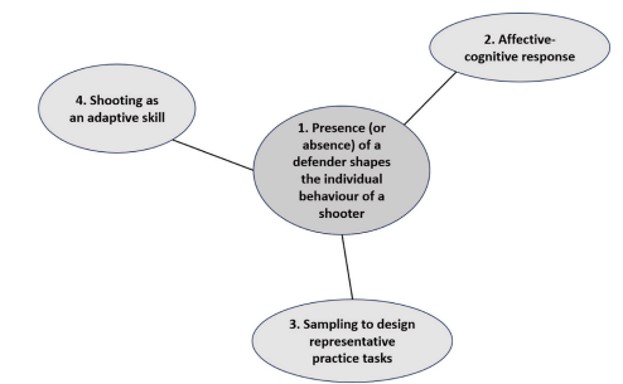
537 How do basketball shots differ when practicing unopposed vs against a defender? Does playing 1 vs 1 take a good “slice” or sample of the competitive environment, or do we need to practice with larger numbers?Download link Article:Sampling perception-action couplings from competition create representative basketball shooting tasks: A replication and extension of Gorman and…

Read More

536 – The value of opposed and unopposed practice, Tom Parry

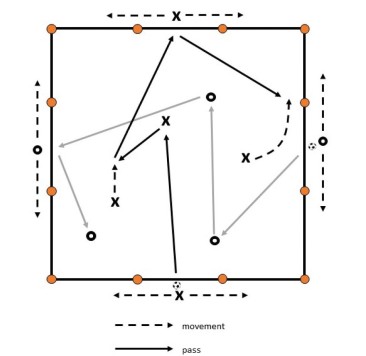
536 An interview with Tom Parry from Butler University to discuss his new paper looking at the value of opposed vs unopposed practice in ecological dynamics.Download link Article & Links:The value of opposed and unopposed practice: An ecological dynamics rationale for skill developmenthttps://x.com/kestrelpsychhttps://kestrelpsychology.wixsite.com/kestrelpsychology\https://www.linkedin.com/in/tom-parryphd/   More information:Subscribe in iOS/AppleSubscribe in Android/GoogleMy Research Gate Page (pdfs of…

Read More

535 – Individual Differences in the Benefits of Linear and Non-Linear Pedagogy Approach to Skill Training

535 Does “it depend” when choosing between using a nonlinear vs linear pedagogy approach to coaching? Do some learners benefit from a prescriptive, linear approach? A look at the potential mediating role of adaptability.Download link Article:The influence of linear and nonlinear pedagogy on motor skill performance: the moderating role of adaptability More information:Subscribe in iOS/AppleSubscribe…

Read More

534 – Is the Distance Effect Found in Focus of Attention Research Spatial or Temporal?

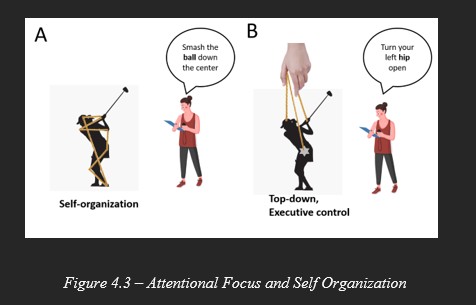
534 A review of the paper: “The Distance Effect in Focus of Attention: Spatial or Temporal Distance?” by Kevin Becker and colleagues. What matters: whether a cue is closer to the body or during vs after execution?Download link Article:The Distance Effect in Focus of Attention: Spatial or Temporal Distance? More information:Subscribe in iOS/AppleSubscribe in Android/GoogleMy…

Read More