PodEpisodes

72 – Interview with Edward Coughlan, CIT, Skill Acquisition & Deliberate Practice

72 A discussion with Edward Coughlan. Lecturer in Skill Acquisition at the Cork Institute of Technology in Ireland. We discuss practice design, skill acquisition, deliberate practice, and occlusion training with Chin Up Googles. Download link More information about my guest: https://www.researchgate.net/profile/Edward_Coughlan2 http://dredwardcoughlan.com/profile/ https://twitter.com/DrSkillAcq http://www.chinupgoggles.com/ More information: Subscribe in iOS/Apple Subscribe in Android/Google My Research Gate…

Read More
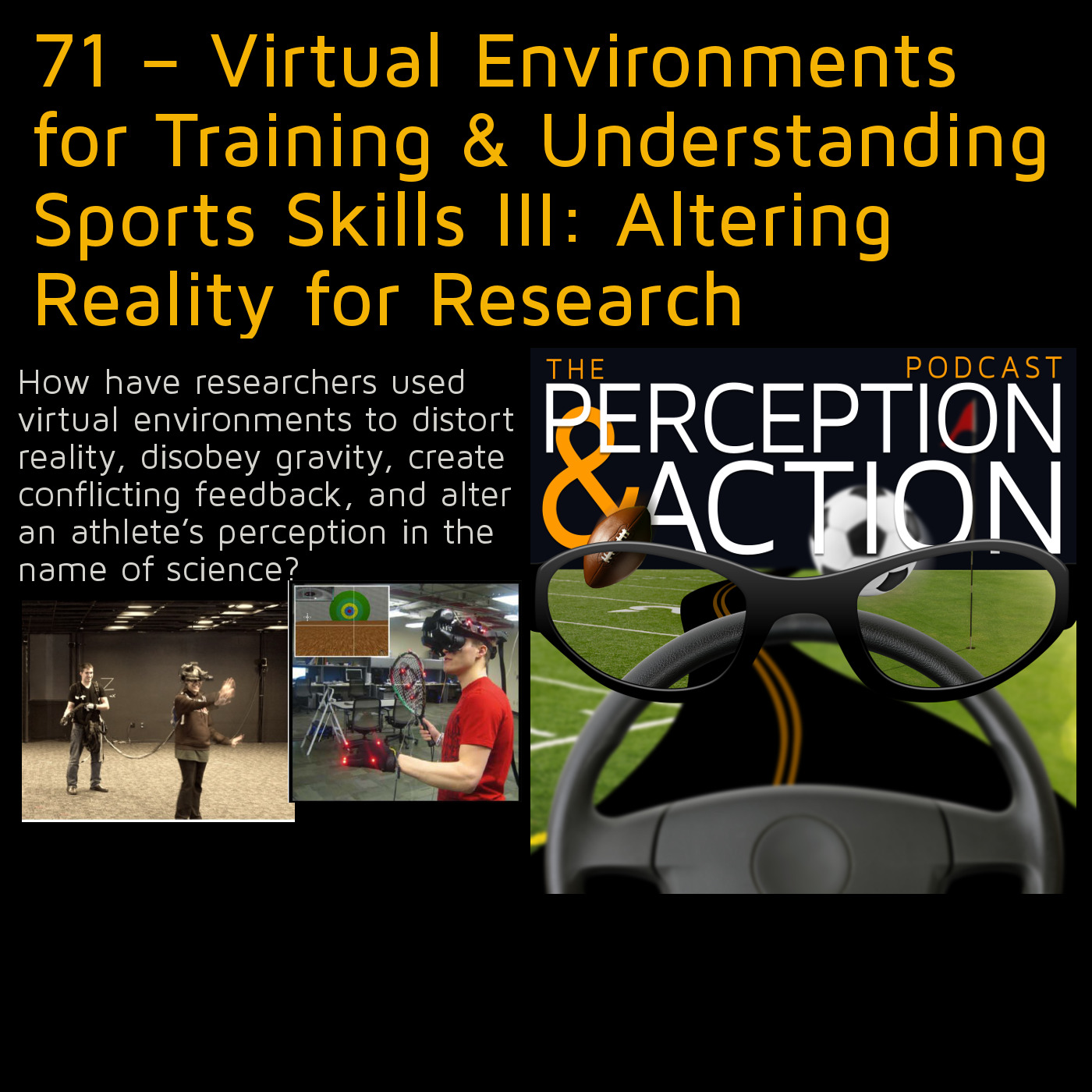
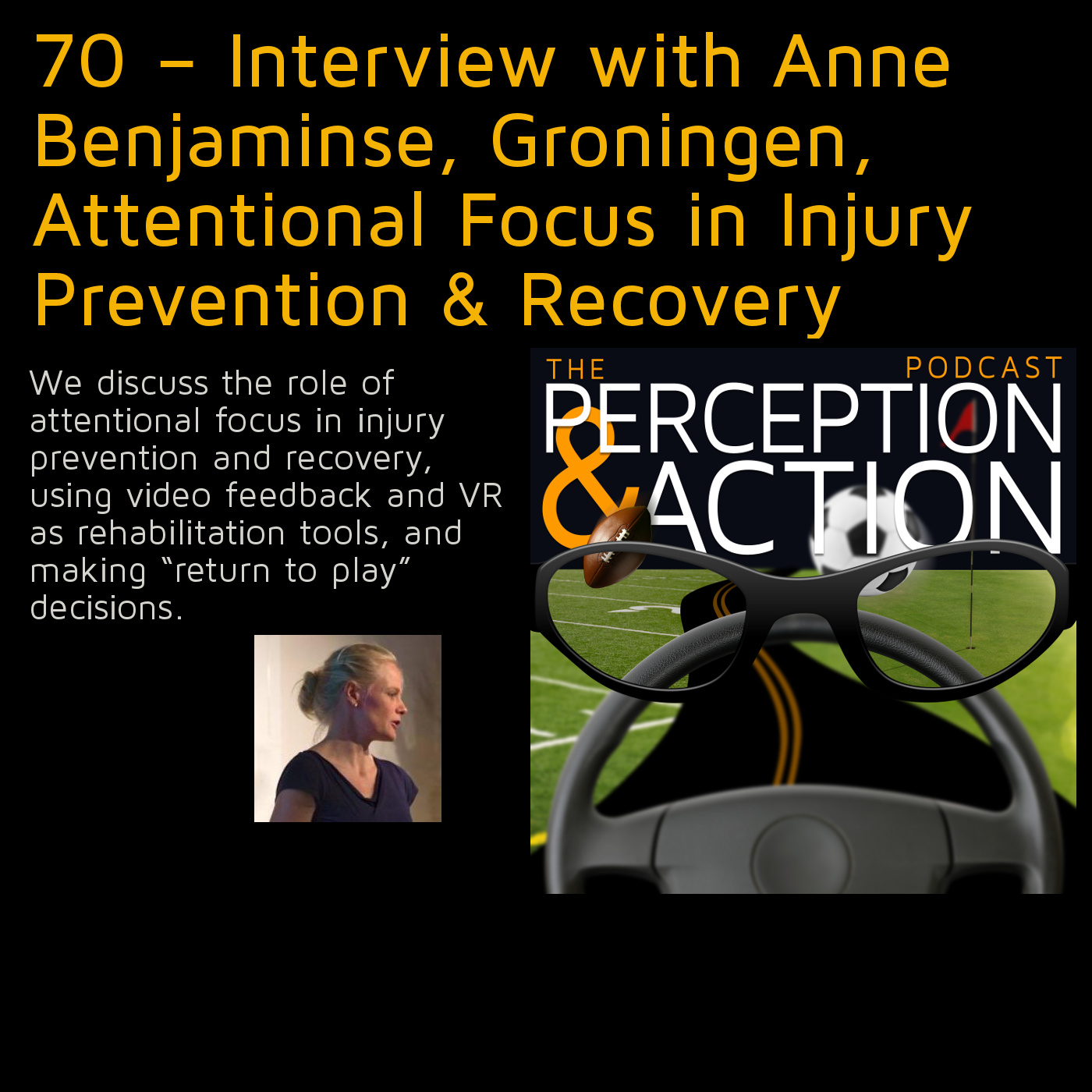
71 – Virtual Environments for Training & Understanding Sports Skills III: Altering Reality for Research

71 How have researchers used virtual environments to distort reality, disobey gravity, create conflicting feedback, and alter an athlete’s perception in the name of science? How have they effectively brought rate events in sports into the lab? Download link Articles: Behavior of College Baseball Players in a Virtual Batting Task Perceiving and Acting upon Spaces…

Read More

70 – Interview with Anne Benjaminse, Groningen, Attentional Focus in Injury Prevention & Recovery

70 A discussion with Anne Benjaminse from the Department for Human Movement Sciences at the University of Groningen, The Netherlands. We discuss the role of attentional focus in injury prevention and recovery, using video feedback and VR as rehabilitation tools, and making “return to play” decisions. Download link More information about my guest: http://www.rug.nl/staff/a.benjaminse/ https://www.researchgate.net/profile/Anne_Benjaminse…

Read More

69 – Virtual Environments for Training & Understanding Sports Skills II: Evaluating the Evidence

69 How effective are VEs for sports training? Have they achieved good fidelity? Can they induce competitive anxiety? Does augmentation help performance? Do they show evidence of transfer of training? Download link Articles: Distance Perception in Real and Virtual Environments Do monocular time-to-collision estimates necessarily involve perceived distance? Motion in depth: Adequate and inadequate simulation…

Read More

68 – Interview with Emma Mosley, Southampton Solent, Emotional Intelligence, HRV & Pressure

68 A discussion with Emma Mosley, Lecturer in the School of Sport, Health and Social Sciences at Southampton Solent University. We discuss topics including emotional intelligence, guidelines for using heart rate variability, performance under pressure, and links between personality traits and sports. Download link More information about my guest: https://www.solent.ac.uk/staff-profiles/academic-profiles/emma-mosley/emma-mosley https://www.researchgate.net/profile/Emma_Mosley https://twitter.com/ Emma_Mosley More information:…

Read More

67 – Virtual Environments for Training & Understanding Sports Skills I: Why, How and When?

67 What are the potential advantages of using virtual environments (VE) to train and study sports skills? How should a VE be evaluated? How important is fidelity, presence, and cost? When is the best time to use a VE in relation to skill level and physical training? Why haven’t VE’s been more widely adopted? Download…

Read More

66 – Interview with Gerard Jones, Bristol Rovers FC, Coaching to Develop Decision Making

66 A discussion with Gerard Jones, Head of Coaching at Bristol Rovers Football Club. We discuss topics including developing decision making skills in players through improved communication, how to handle regional differences in sports vocabulary, encouraging different levels of knowledge in players, and how to balance player and coach development. Download link More information about…

Read More

65 – Body Awareness, Kinaesthetic Sensitivity & Proprioceptive Training

65 How important is feel or body awareness in sports? How can we assess kinaesthetic sensitivity and proprioceptive acuity in athletes and can these be improved through training? How does it influence an athlete’s ability to implement technical changes? Download link Articles: Level of competitive success achieved by elite athletes and multi-joint proprioceptive ability Exploring…

Read More

64 – Intermittent Vision: How Much Do We Need to Be Able to See To Act?

64 How well can we integrate samples from a visual scene (e.g. when an outfielder is trying to catch a fly ball and has to look from the ball to the wall and back)? How long of a view do we need and what interval between samples can we tolerate? Does training to perform under…

Read More

63 – Innovative Video Feedback, Affordances for Movement & Team Coordination

63 News: A look at a few recent articles in the area of motor learning and performance. Can skill execution be improved by combining self and expert models in video feedback? How do combat athletes using affordance to control interpersonal distance? How can we determine the degree to which the decisions made by teammates are…

Read More